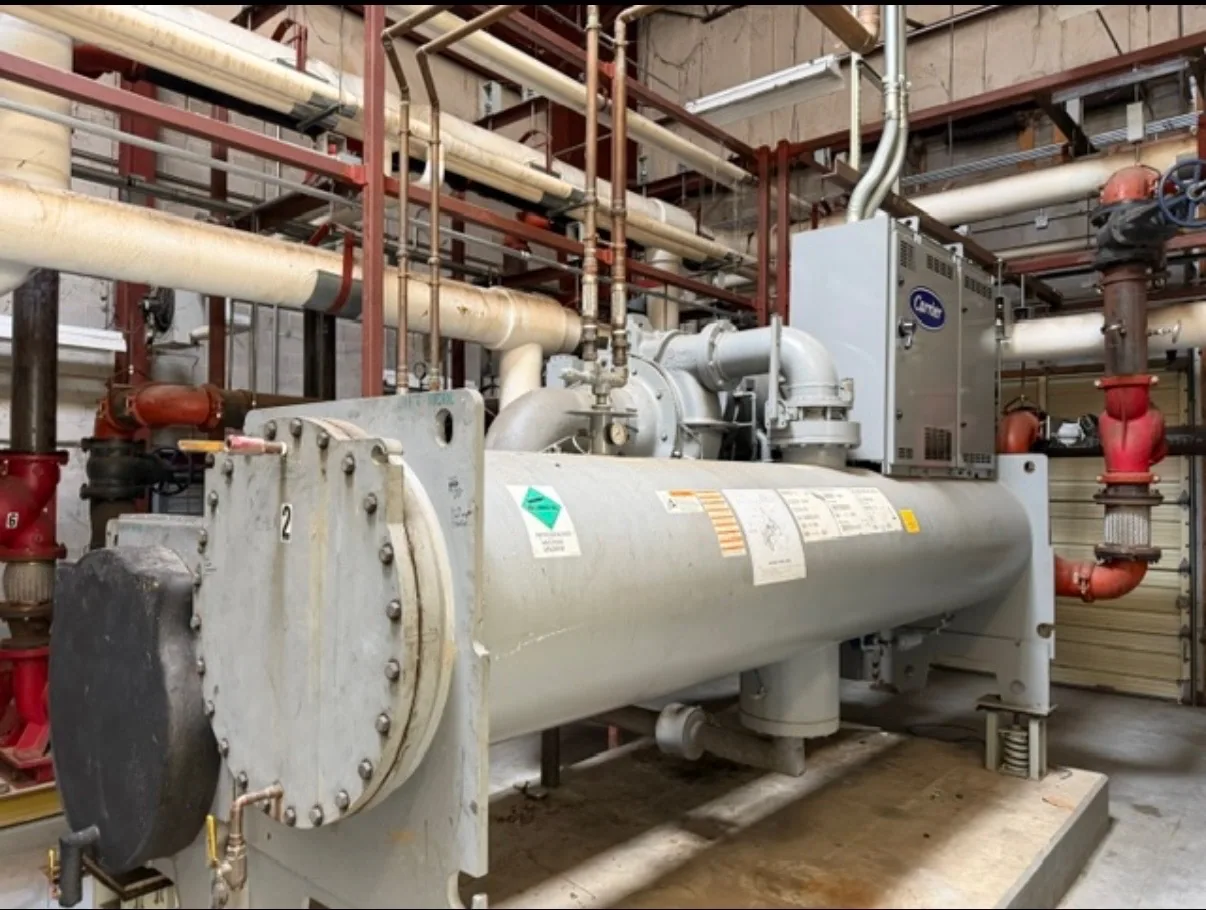
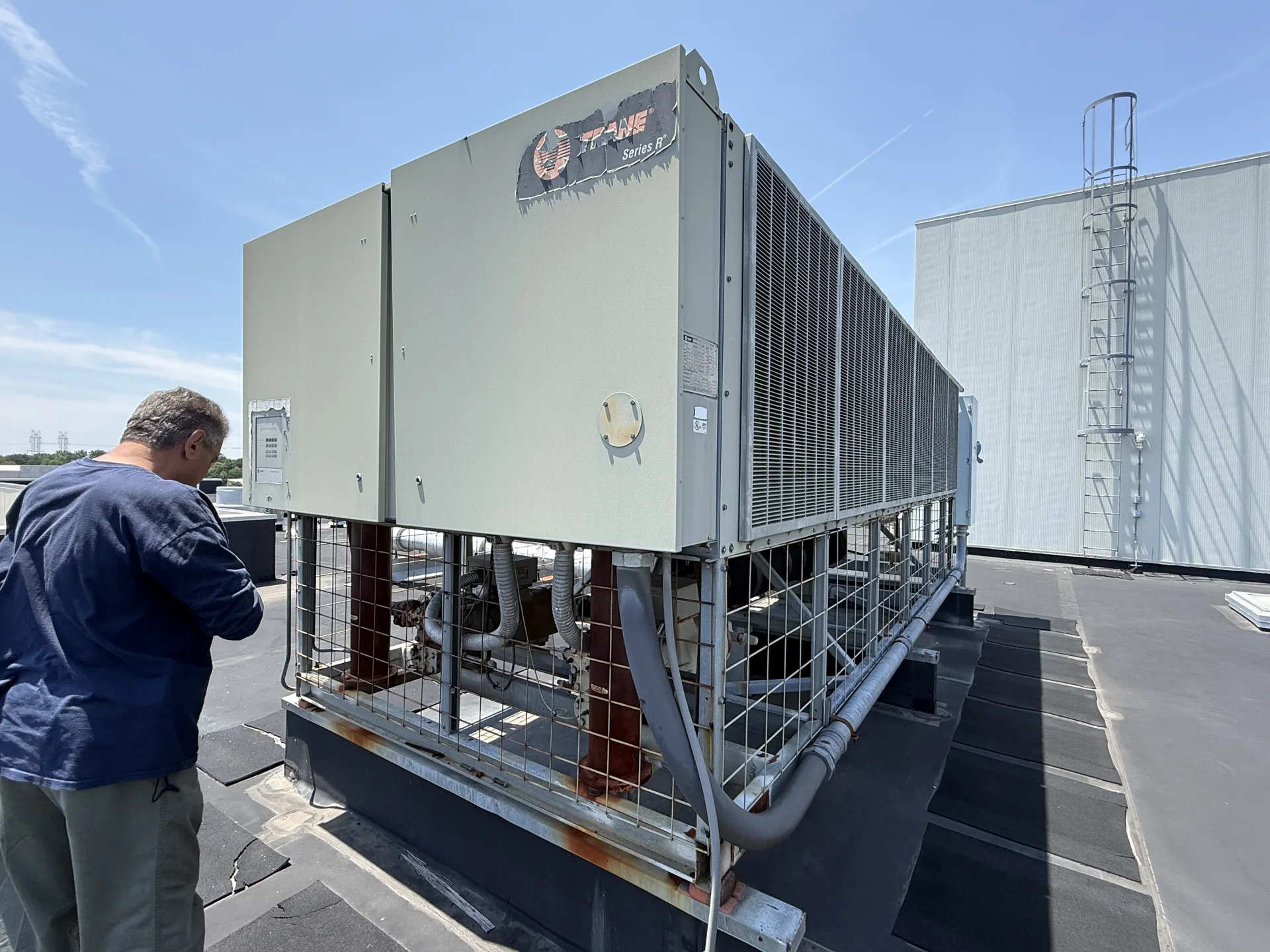
If you have an industrial chiller to sell in Catawba County, NC, the starting point is an accurate description of the machine and the conditions at the site. This buyer purchases used industrial chillers across North Carolina, including air-cooled and water-cooled equipment with centrifugal, screw or scroll compressors. Equipment from about 20 tons through 2,000 tons and larger can be discussed. You do not have to start or test the unit to ask about an offer.
The details of the particular Catawba County, NC equipment matter more than a general location label. Describe the unit’s location within the property, the available path to an exit, and what you know about its condition. If you have photographs or records, share them; if something is uncertain, explain that it is unknown. A practical discussion can begin before every detail has been gathered, and the buyer can identify useful follow-up information.
What if information is missing?
Missing information is a reason to explain the gap, not to make up an answer. If you cannot identify the tonnage, refrigerant, operating condition or manufacturer, describe what is visible and send any safe photographs you have. The scope of the discussion can be adjusted once more is known. Do not assume a refrigerant or a capacity from appearance alone. A tentative description should stay clearly marked as tentative.
Describe condition without running the unit
An honest condition summary is more useful than a performance claim. You might know that a chiller was shut down during a replacement project, that it has been idle, or that certain pieces were removed. Those are examples, not requirements. A gap in the service history does not need to be filled with a guess. The seller does not need to test, start, repair or demonstrate the chiller. The buyer can consider the information supplied and discuss an offer based on the actual circumstances.
Separate observations from assumptions
There is no need to fill every gap in an old equipment file. For example, you may know when a machine was taken out of service without knowing its present operating condition. You may have an older equipment list but no current reading of the nameplate. Explain which information comes from an existing record and which comes from observation. The buyer does not require the seller to start or test the machine and can discuss an offer using the available information.
Confirm who can authorize the sale
Ownership and authorization deserve attention alongside the equipment details. A property owner, tenant, facility operator or project representative may have different responsibilities. Explain the situation accurately and resolve any questions about ownership or permission with the appropriate parties. If the chiller is part of a larger project, clarify which items can be released. This is a practical planning point, not a substitute for advice about a particular agreement.
Describe where the equipment sits
The chiller’s location matters as much as its label when planning removal. Explain whether it is indoors, outdoors, on a roof or in a lower-level mechanical space. Mention obstructions, narrow paths and any nearby equipment that must remain. Access for a person is not necessarily access for a large machine. The buyer can use this information to discuss the practical scope of the disconnect, lift, loading and freight.
Think about the route out
An exit route involves more than the width of the nearest doorway. Note visible restrictions such as low clearances, ramps, tight corners or obstructions. If you have reliable dimensions, share them; if not, say the measurements are not yet known. A drawing can supplement photographs of the path. The seller does not need to move or dismantle the chiller to obtain an initial offer discussion.
Understand the buyer-handled removal scope
Selling an industrial chiller involves both the asset and the practical removal. This buyer handles and pays for refrigerant recovery, electrical disconnect, crane, rigging, loading and freight. Share details about the equipment location, access and any systems that remain so those tasks can be discussed for the particular site. The seller is not expected to run or test the machine. Any site-specific schedule and transaction terms should be agreed before proceeding.
Discuss lifting and rigging needs
The lift and rigging approach depends on the actual machine and site. Explain where the machine sits, how much space is available and whether overhead or ground-level restrictions are visible. If a weight or drawing is available, share it; otherwise mark the information as unknown. The buyer pays for and coordinates the necessary crane and rigging. The specific plan is determined for the equipment and site.
Prepare for a clear handoff
After an offer discussion, confirm who will coordinate the release of the machine. Review the agreed access arrangements, schedule constraints and boundaries of the sale. If any equipment details change, tell the buyer before the planned work. A simple record of open questions helps the right people resolve them. The buyer handles and pays for the agreed recovery, disconnect, crane, rigging, loading and freight.
What information supports an offer?
A buyer needs context about both the machine and its removal. Share the manufacturer, model, capacity, condition and refrigerant type if known, along with photographs of the equipment and its access route. Mention whether other items are included and when the unit can be released. Estimates should be clearly labeled as estimates. The buyer can review the actual details and discuss a cash offer rather than treating every project as identical.
Request a chiller offer
To discuss your equipment, call (614) 715-3047 or email saleselectricalbuyers@gmail.com. Share whatever nameplate details, condition notes, location and access photographs are available. The buyer can review the information and discuss a cash offer with upfront payment and buyer-paid removal. You do not have to test or run the chiller before contacting the buyer.