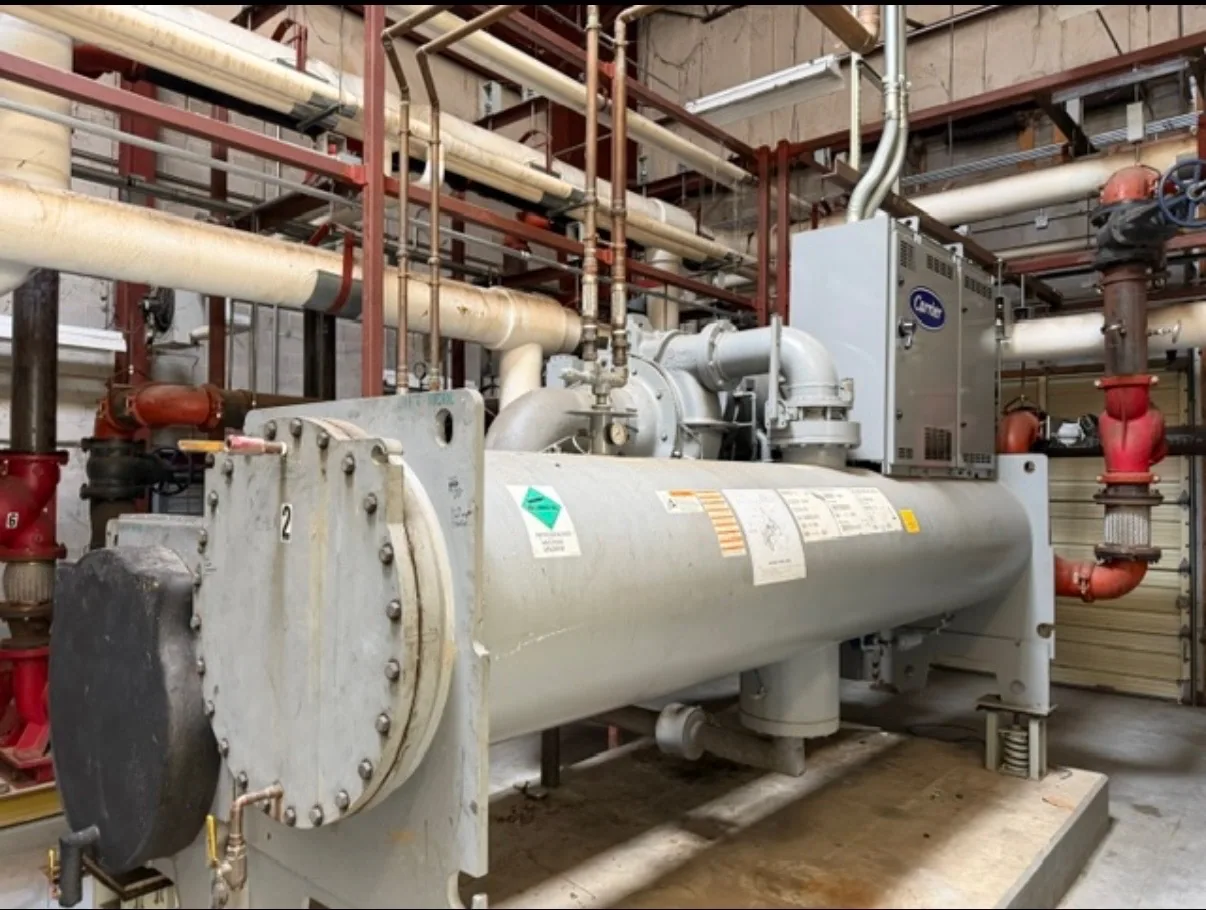
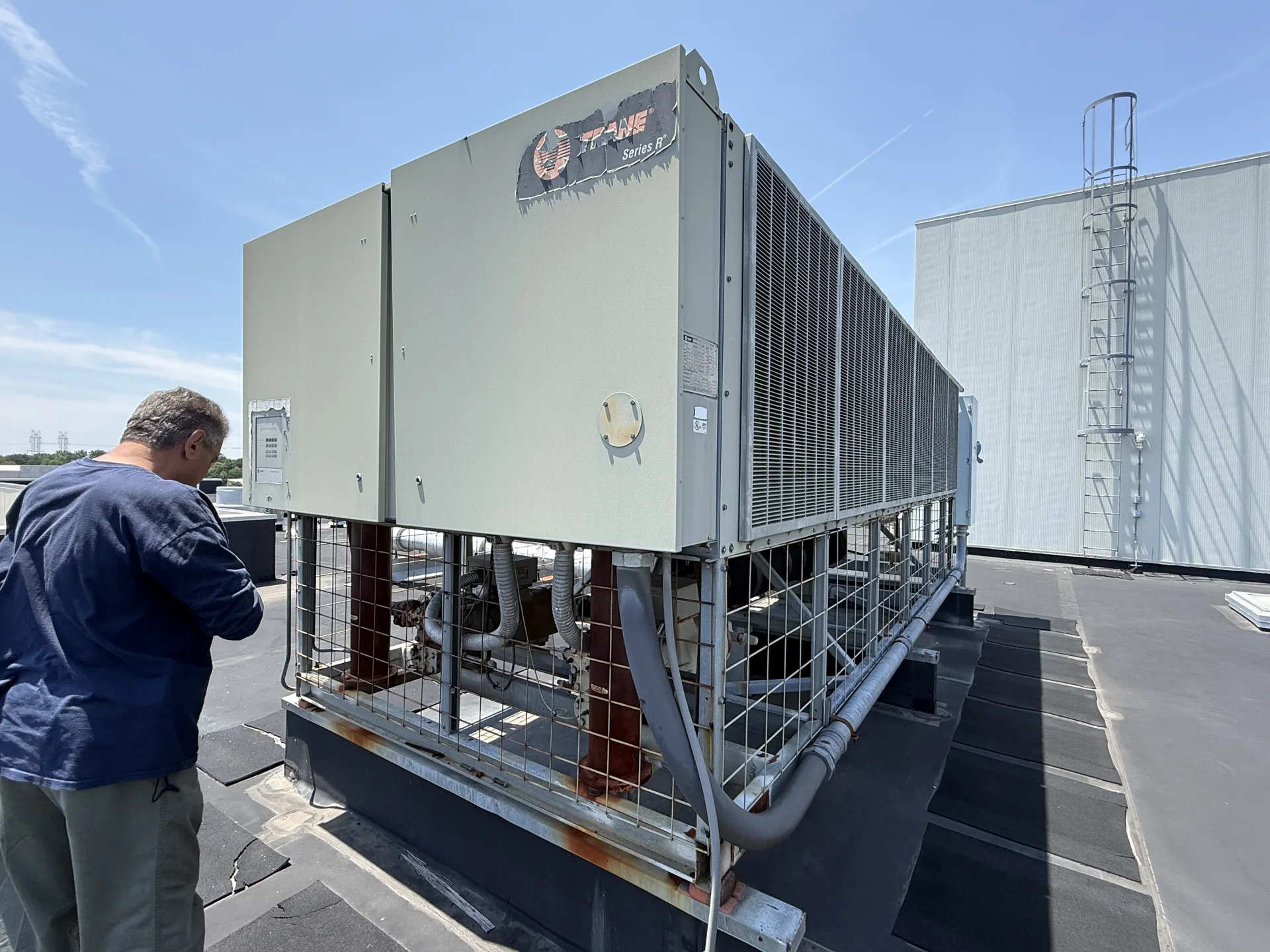
If you have an industrial chiller to sell in Smithfield, NC, the starting point is an accurate description of the machine and the conditions at the site. This buyer purchases used industrial chillers across North Carolina, including air-cooled and water-cooled equipment with centrifugal, screw or scroll compressors. Equipment from about 20 tons through 2,000 tons and larger can be discussed. You do not have to start or test the unit to ask about an offer.
The details of the particular Smithfield, NC equipment matter more than a general location label. Describe the unit’s location within the property, the available path to an exit, and what you know about its condition. If you have photographs or records, share them; if something is uncertain, explain that it is unknown. A practical discussion can begin before every detail has been gathered, and the buyer can identify useful follow-up information.
Use records as context, not a substitute for the machine
Old service records may help distinguish similar units. Share what is available, including any information that identifies the equipment to be sold. If documents describe several machines, point out which entry may correspond to the unit. Records do not need to be complete before making contact. The buyer can review the information alongside photographs and ask follow-up questions about the machine and its location.
What if information is missing?
You can contact the buyer even when some equipment details are unavailable. If you cannot identify the tonnage, refrigerant, operating condition or manufacturer, describe what is visible and send any safe photographs you have. The buyer can tell you which additional details would be helpful. Do not assume a refrigerant or a capacity from appearance alone. A tentative description should stay clearly marked as tentative.
Make a simple equipment list
A short inventory is especially useful when several units are involved. List the manufacturer, model and approximate capacity when known, then note the location and condition of each unit. A photograph of each nameplate can be matched to a wider equipment picture. One unit may have records that are unavailable for another. If a detail is uncertain, leave it open. The buyer can discuss the full group or the equipment actually available for sale.
Describe condition without running the unit
An honest condition summary is more useful than a performance claim. You might know that a chiller was shut down during a replacement project, that it has been idle, or that certain pieces were removed. Those are examples, not requirements. It is equally acceptable to say that the operating history is unknown. The seller does not need to test, start, repair or demonstrate the chiller. The buyer can consider the information supplied and discuss an offer based on the actual circumstances.
Separate observations from assumptions
Good equipment descriptions make uncertainty visible. For example, you may know when a machine was taken out of service without knowing its present operating condition. You may have an older equipment list but no current reading of the nameplate. Share those distinctions plainly. The buyer does not require the seller to start or test the machine and can discuss an offer using the available information.
Explain site access and working restrictions
Access rules can shape the removal plan. Explain where vehicles can enter, who authorizes access and whether a route crosses occupied space. Mention any scheduling restrictions, security procedures or building management requirements that apply to the site. If access details are not settled, identify the person who can clarify them. This information helps the buyer discuss crane, rigging, loading and freight without assuming that all sites are alike.
Think about the route out
Doors, corridors and turns are worth discussing before a removal date is set. Note visible restrictions such as low clearances, ramps, tight corners or obstructions. If you have reliable dimensions, share them; if not, say the measurements are not yet known. Changes to a proposed route should be communicated before the work is scheduled. The seller does not need to move or dismantle the chiller to obtain an initial offer discussion.
Understand the buyer-handled removal scope
The offer and the removal scope should be considered together. This buyer handles and pays for refrigerant recovery, electrical disconnect, crane, rigging, loading and freight. Share details about the equipment location, access and any systems that remain so those tasks can be discussed for the particular site. No seller startup or testing is needed. Any site-specific schedule and transaction terms should be agreed before proceeding.
Flag connections to systems that remain
The boundaries between the chiller and the rest of the facility matter. Piping, electrical equipment, controls and adjacent machinery may be involved in a particular installation. A photograph or marked-up facility drawing can help explain which equipment is being sold and what must remain. The buyer handles the disconnect as part of the purchase and removal scope. Do not attempt electrical or refrigerant work yourself to prepare the unit for sale.
What information supports an offer?
The condition of the chiller is only one part of the conversation. Share the manufacturer, model, capacity, condition and refrigerant type if known, along with photographs of the equipment and its access route. Mention whether other items are included and when the unit can be released. If some information is missing, explain what you do know. The buyer can review the actual details and discuss a cash offer rather than treating every project as identical.
Request a chiller offer
To discuss your equipment, call (614) 715-3047 or email saleselectricalbuyers@gmail.com. Share whatever nameplate details, condition notes, location and access photographs are available. The buyer can review the information and discuss a cash offer with upfront payment and buyer-paid removal. You do not have to test or run the chiller before contacting the buyer.