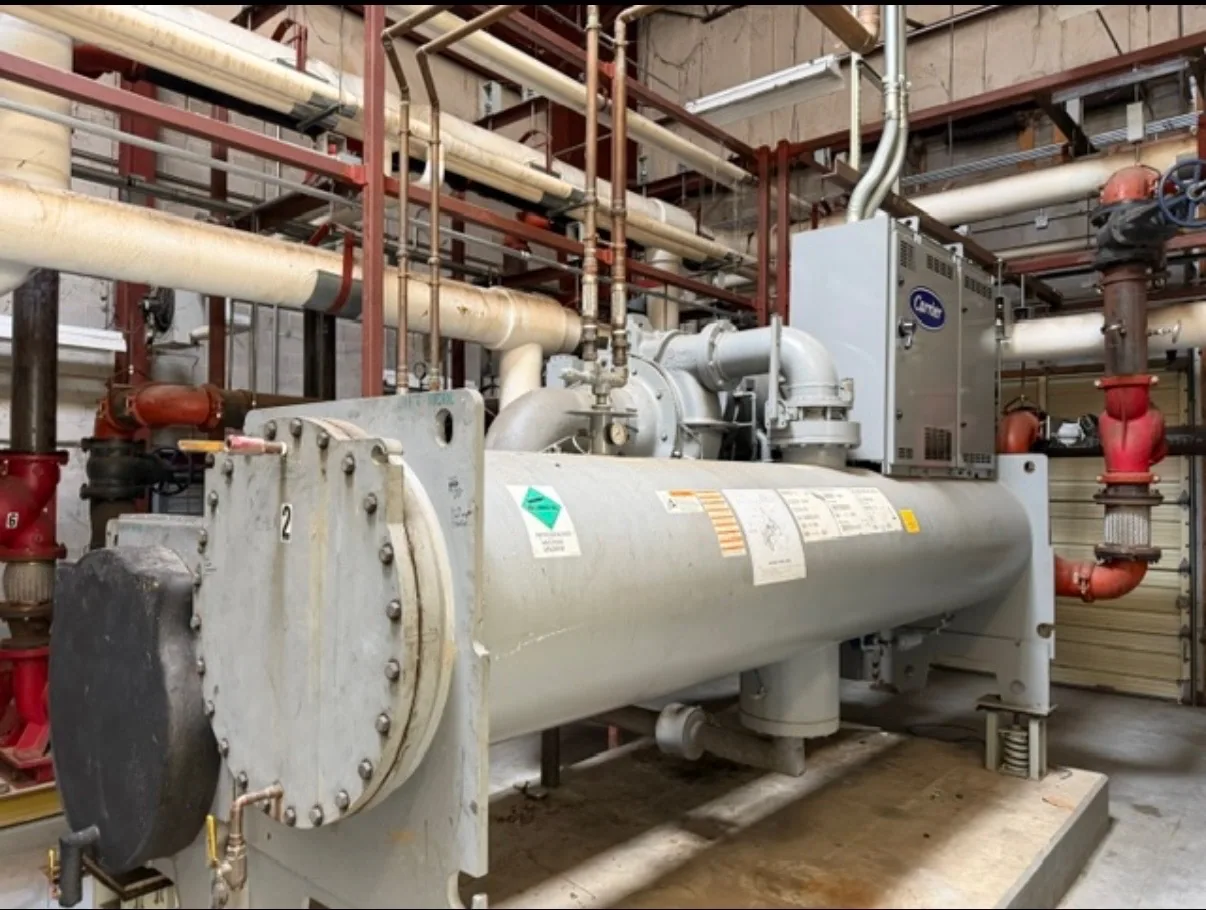
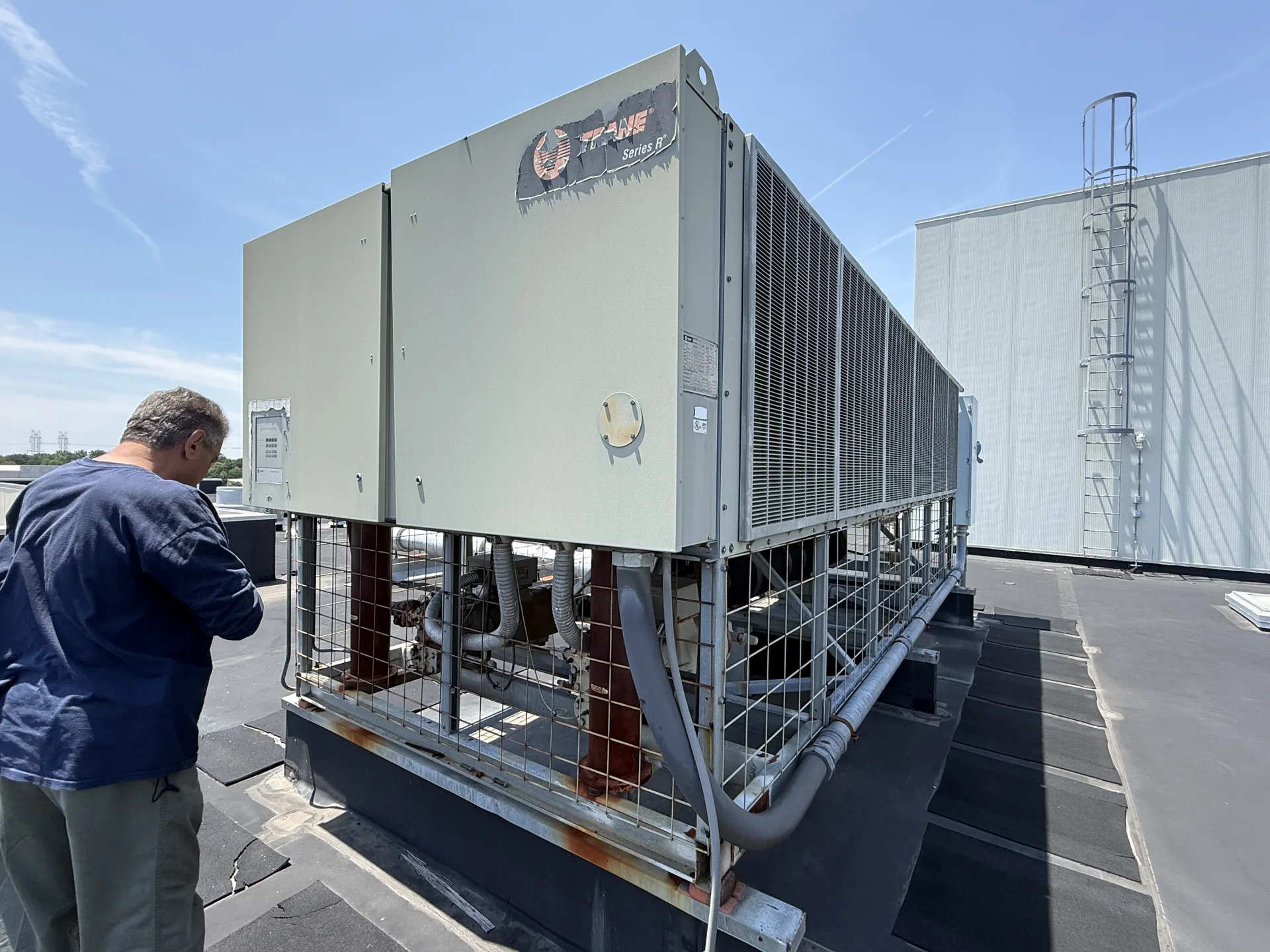
Handling Chiller Information Gaps starts with the particulars of the chiller and the property, rather than a generic assumption about what every unit looks like. If you have an industrial chiller to sell in North Carolina, describe its manufacturer, model, capacity and condition when known. Photographs of the equipment and its access route can help the buyer understand the situation. Missing information can simply be identified as unknown.
This business buys chillers rather than sells them. It makes cash offers with upfront payment and handles and pays for refrigerant recovery, electrical disconnect, crane, rigging, loading and freight. Equipment may be air-cooled or water-cooled, with centrifugal, screw or scroll compressors. The seller does not have to start or test the chiller; the buyer can discuss an offer based on the information and site details available.
Separate capacity from lifting weight
A tonnage rating describes cooling capacity, not the weight of the equipment. When a plate or existing record identifies the rating, share the exact wording or send a photograph. Dimensions, handling weight and the planned exit route are separate questions. An estimate of capacity cannot establish whether a doorway is wide enough. If physical measurements or weight information are unavailable, say so and discuss the next steps with the buyer.
Make a simple equipment list
A short inventory is especially useful when several units are involved. List the manufacturer, model and approximate capacity when known, then note the location and condition of each unit. A photograph of each nameplate can be matched to a wider equipment picture. One unit may have records that are unavailable for another. If a detail is uncertain, leave it open. The buyer can discuss the full group or the equipment actually available for sale.
Confirm who can authorize the sale
A useful early question is who has the authority to release the chiller. A property owner, tenant, facility operator or project representative may have different responsibilities. Explain the situation accurately and resolve any questions about ownership or permission with the appropriate parties. When several teams are involved, agree on a decision-maker. This is a practical planning point, not a substitute for advice about a particular agreement.
Describe condition without running the unit
Describe the equipment’s known condition in ordinary language. You might know that a chiller was shut down during a replacement project, that it has been idle, or that certain pieces were removed. Those are examples, not requirements. It is equally acceptable to say that the operating history is unknown. The seller does not need to test, start, repair or demonstrate the chiller. The buyer can consider the information supplied and discuss an offer based on the actual circumstances.
Describe where the equipment sits
A clear description of the equipment location helps frame the removal discussion. Explain whether it is indoors, outdoors, on a roof or in a lower-level mechanical space. Mention obstructions, narrow paths and any nearby equipment that must remain. Access for a person is not necessarily access for a large machine. The buyer can use this information to discuss the practical scope of the disconnect, lift, loading and freight.
Explain site access and working restrictions
Access rules can shape the removal plan. Explain where vehicles can enter, who authorizes access and whether a route crosses occupied space. Mention any scheduling restrictions, security procedures or building management requirements that apply to the site. Separate a confirmed rule from a question that still needs approval. This information helps the buyer discuss crane, rigging, loading and freight without assuming that all sites are alike.
Include refrigerant in the removal conversation
The actual refrigerant should be identified from the equipment or reliable records when possible. If the type or status is unknown, tell the buyer that it is unknown. The buyer handles and pays for refrigerant recovery as part of the equipment removal. Flagging the information early helps avoid assumptions during planning. EPA explains disposal requirements for chillers in its stationary refrigeration guidance.
Understand the buyer-handled removal scope
The equipment purchase includes a discussion of how the machine will leave the site. This buyer handles and pays for refrigerant recovery, electrical disconnect, crane, rigging, loading and freight. Share details about the equipment location, access and any systems that remain so those tasks can be discussed for the particular site. The seller does not have to demonstrate operation. Any site-specific schedule and transaction terms should be agreed before proceeding.
Questions to ask before accepting an offer
Before accepting, review both the equipment scope and the work associated with removal. Ask which machine and related items are included, how upfront payment is arranged, and who handles recovery, disconnect, lifting, loading and transportation. For this buyer, those removal items are handled and paid for by the buyer. Discuss any site restrictions that may affect scheduling. Final arrangements depend on the actual equipment and agreed terms.
What information supports an offer?
A useful offer discussion brings together the equipment and the site. Share the manufacturer, model, capacity, condition and refrigerant type if known, along with photographs of the equipment and its access route. Mention whether other items are included and when the unit can be released. Unknown details should be identified as unknown. The buyer can review the actual details and discuss a cash offer rather than treating every project as identical.
Request a chiller offer
To discuss your equipment, call (614) 715-3047 or email saleselectricalbuyers@gmail.com. Share whatever nameplate details, condition notes, location and access photographs are available. The buyer can review the information and discuss a cash offer with upfront payment and buyer-paid removal. You do not have to test or run the chiller before contacting the buyer.