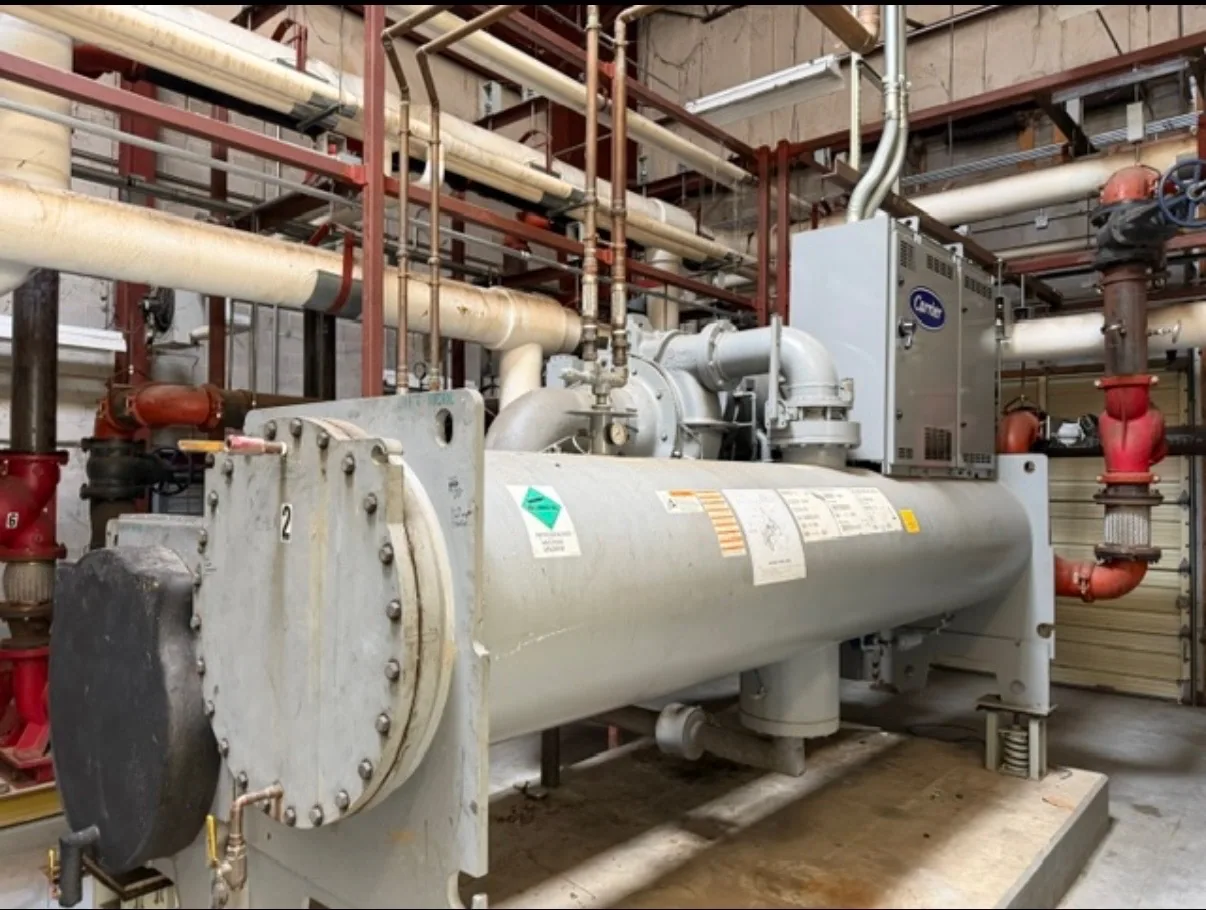
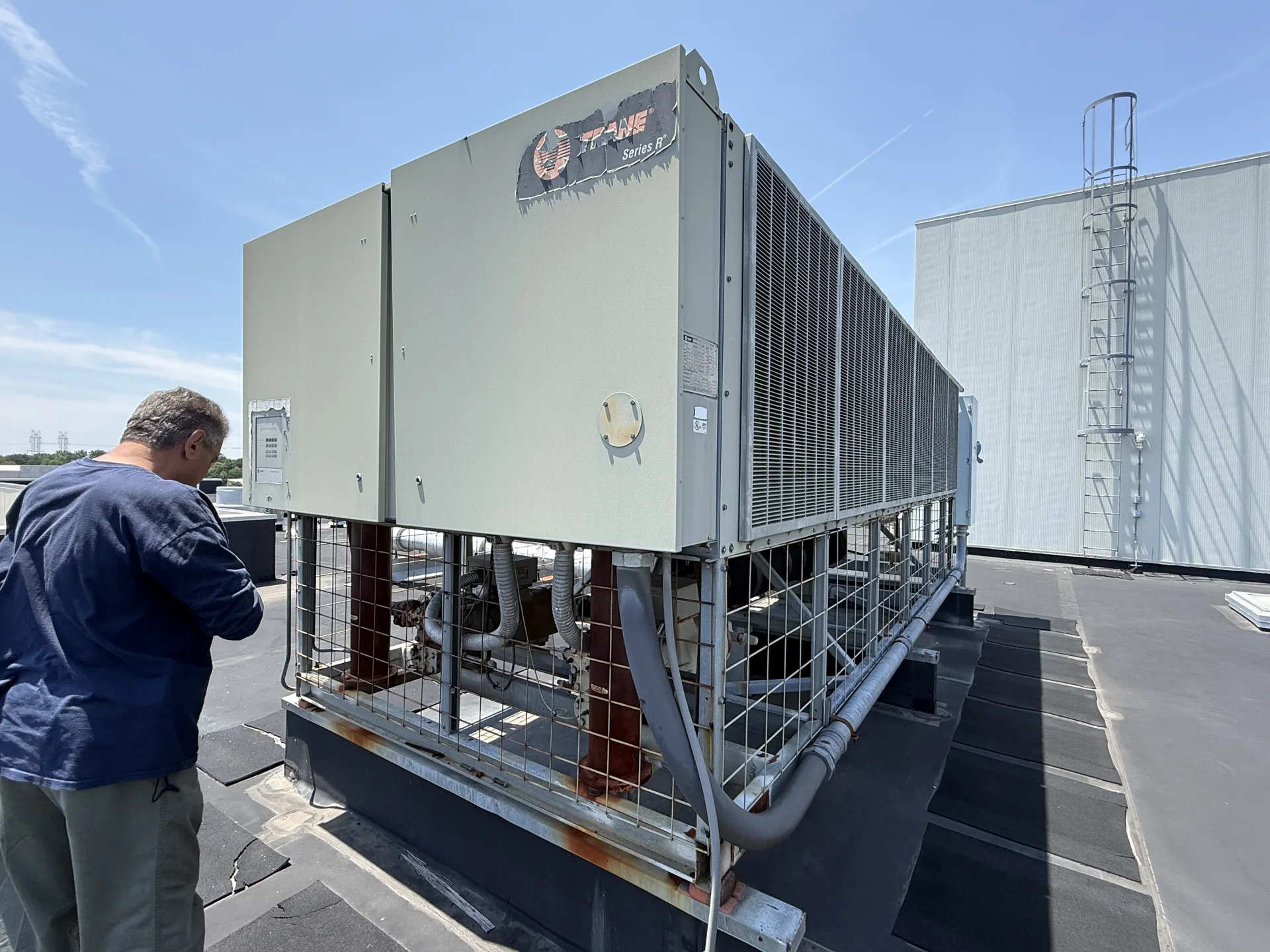
If you have a Carrier chiller to sell in North Carolina, identify the particular machine rather than relying on the manufacturer name alone. A nameplate photograph, model and capacity are useful when available; condition and the actual route out of the property are important too. This business buys industrial chillers and makes cash offers with upfront payment. The seller does not need to start or test the equipment.
The Carrier name by itself does not establish the unit’s refrigerant, components, weight, cooling method or condition. Equipment may vary, so describe what is on your machine and identify information you cannot verify. The sale is a direct discussion with a chiller buyer, not an offer to sell you replacement equipment, and no manufacturer affiliation is implied. Where access is constrained, photographs of the surrounding space help frame the removal conversation.
Start with the equipment identification
A readable nameplate can give a buyer a useful starting point. It may provide a manufacturer, model, serial number, rated capacity or refrigerant information, but the details shown differ by unit. Include the whole plate before taking a closer image of small lettering. A maintenance record may supply information that is difficult to read. If the plate is damaged or missing, say so rather than guessing. General views of the machine and any available records still give the buyer a way to begin the discussion.
Take photographs that answer practical questions
Wide equipment photographs help establish what is included. A view showing the complete unit helps separate the chiller from nearby equipment. A second set can show the identification plate, visible connections and any detached components that may be part of the sale. Include an overview of access restrictions if you can safely photograph them. Do not move equipment or open electrical enclosures to obtain photographs. If an area cannot be viewed safely, describe the limitation instead.
Keep the project team informed
The person who owns the chiller may not be the person who controls building access. Identify the authorized seller, the person who can answer equipment questions, and the contact who knows the access route. Explain which details are confirmed and which are still being reviewed. It gives the buyer a practical starting point for follow-up questions. The buyer will discuss the proposed purchase and removal scope for the actual situation.
Describe condition without running the unit
Describe the equipment’s known condition in ordinary language. You might know that a chiller was shut down during a replacement project, that it has been idle, or that certain pieces were removed. Those are examples, not requirements. A gap in the service history does not need to be filled with a guess. The seller does not need to test, start, repair or demonstrate the chiller. The buyer can consider the information supplied and discuss an offer based on the actual circumstances.
Think about the route out
The path from the machine to a loading area is an important project detail. Note visible restrictions such as low clearances, ramps, tight corners or obstructions. If you have reliable dimensions, share them; if not, say the measurements are not yet known. Changes to a proposed route should be communicated before the work is scheduled. The seller does not need to move or dismantle the chiller to obtain an initial offer discussion.
Include refrigerant in the removal conversation
Do not infer a chiller’s refrigerant solely from its appearance or brand. If the type or status is unknown, tell the buyer that it is unknown. The buyer handles and pays for refrigerant recovery as part of the equipment removal. Flagging the information early helps avoid assumptions during planning. EPA explains disposal requirements for chillers in its stationary refrigeration guidance.
Flag connections to systems that remain
Identify nearby systems that need to stay in place. Piping, electrical equipment, controls and adjacent machinery may be involved in a particular installation. A photograph or marked-up facility drawing can help explain which equipment is being sold and what must remain. The buyer handles the disconnect as part of the purchase and removal scope. Do not attempt electrical or refrigerant work yourself to prepare the unit for sale.
Describe water-side connections when relevant
If the machine is water-cooled, explain what you know about its water connections. A general picture of the installation can help the buyer understand how the unit relates to the rest of the facility. Mention any equipment that needs to stay in place, and describe uncertainties without trying to disconnect anything. The scope should reflect the actual installation, not a presumed layout. The buyer handles and pays for the agreed removal work, including disconnect.
Understand the buyer-handled removal scope
The offer and the removal scope should be considered together. This buyer handles and pays for refrigerant recovery, electrical disconnect, crane, rigging, loading and freight. Share details about the equipment location, access and any systems that remain so those tasks can be discussed for the particular site. The seller does not have to demonstrate operation. Any site-specific schedule and transaction terms should be agreed before proceeding.
What information supports an offer?
A useful offer discussion brings together the equipment and the site. Share the manufacturer, model, capacity, condition and refrigerant type if known, along with photographs of the equipment and its access route. Mention whether other items are included and when the unit can be released. Unknown details should be identified as unknown. The buyer can review the actual details and discuss a cash offer rather than treating every project as identical.
Request a chiller offer
To discuss your equipment, call (614) 715-3047 or email saleselectricalbuyers@gmail.com. Share whatever nameplate details, condition notes, location and access photographs are available. The buyer can review the information and discuss a cash offer with upfront payment and buyer-paid removal. You do not have to test or run the chiller before contacting the buyer.